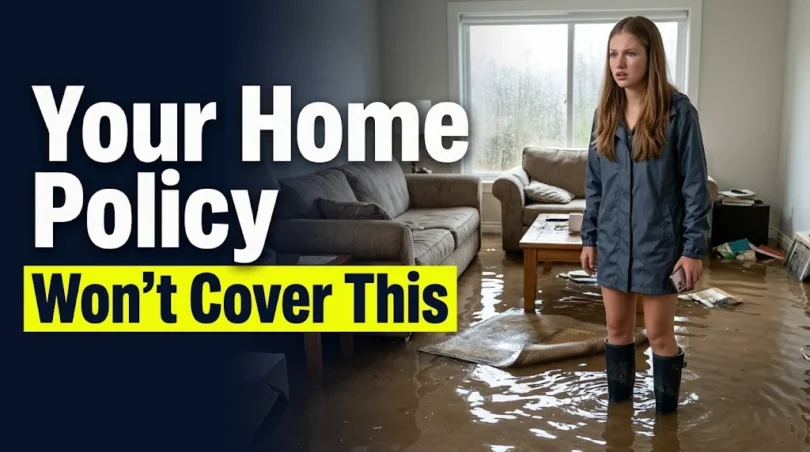

Flood insurance is a separate policy that covers damage from rising water, such as heavy rain, overflowing rivers, storm surge and flash floods. Standard homeowners and renters insurance don’t cover flooding. You can buy flood insurance through the National Flood Insurance Program, run by FEMA, or from private insurers. NFIP policies cover up to $250,000 for a home’s structure and $100,000 for contents, and they usually take 30 days to start, so you can’t wait until a storm is on the way.
Many people assume they only need flood insurance if they live in a high risk flood zone. In reality, a large share of flood claims come from areas outside high risk zones, and just a few inches of water can cause tens of thousands of dollars in damage. Here is how flood insurance works and how to decide whether you need it.
What Counts as a Flood?
For insurance purposes, a flood generally means a temporary condition where normally dry land is covered by water from overflowing inland or tidal waters, unusual and rapid buildup of surface water from any source, or mudflow. In plain terms, it is water coming from outside your home and rising from the ground up.
Water damage from inside your home, like a burst pipe, is usually covered by homeowners insurance instead. Sewer backup is usually a separate endorsement.
Who Needs Flood Insurance?
Required by lenders
If your home is in a FEMA designated Special Flood Hazard Area, often called a high risk flood zone, and you have a mortgage from a federally regulated or insured lender, you are generally required to carry flood insurance.
Strongly worth considering
- You live near a river, lake, coast or creek
- Your area gets heavy rain or hurricanes
- Your home is in a low lying area or has a basement
- Your street floods during heavy storms
- Recent development nearby has changed drainage
- Your area has burned recently, since wildfires make flash floods and mudflows more likely
Renters too
Renters can buy contents only flood coverage to protect their belongings. The landlord’s insurance covers the building, not your furniture and electronics.
NFIP Flood Insurance
| Feature | NFIP |
|---|---|
| Building coverage (home) | Up to $250,000 |
| Contents coverage | Up to $100,000 |
| Waiting period | Usually 30 days, with some exceptions such as at a home purchase |
| Additional living expenses | Not covered |
| Basement coverage | Limited to certain items like furnaces, water heaters and electrical systems |
| Contents valuation | Actual cash value, meaning depreciation is subtracted |
| Where to buy | Through most insurance agents |
NFIP pricing uses a system called Risk Rating 2.0, which looks at each home’s specific flood risk, including distance to water, elevation, rebuilding cost and the types of flooding it could face. Premiums for some homeowners went down under this system, while others are rising gradually toward their full risk price.
NFIP reauthorization deadlines
The NFIP needs Congress to renew its authority periodically. It has lapsed briefly several times in recent years, including during government shutdowns. Its current authorization is set to expire on December 11, 2026. During a lapse, existing policies stay in effect and claims continue to be paid as long as funds are available, but new policies and renewals can’t be issued until Congress acts. Private flood insurance isn’t affected by these deadlines.
Private Flood Insurance
Private insurers have become a bigger part of the flood market. Private policies may offer:
- Higher coverage limits for expensive homes
- Shorter waiting periods, sometimes as little as a couple of weeks
- Additional living expenses if you must move out
- Replacement cost coverage for belongings
- Better basement coverage
- Lower prices for some properties
Private flood policies can also have drawbacks. Insurers can cancel or non renew policies more easily than the NFIP, and prices in high risk areas can be high. Lenders generally accept private flood policies if they meet federal requirements.
NFIP vs Private: Side by Side
| Feature | NFIP | Private |
|---|---|---|
| Max building coverage | $250,000 | Often higher |
| Max contents coverage | $100,000 | Often higher |
| Waiting period | Usually 30 days | Often shorter |
| Living expenses | No | Often yes |
| Contents payout | Actual cash value | Replacement cost available |
| Affected by NFIP lapses | Yes | No |
| Cancellation risk | Low | Higher |
Some homeowners combine the two: an NFIP policy for the base coverage plus a private excess flood policy for higher limits.
What Flood Insurance Covers
Building coverage
- The structure and foundation
- Electrical and plumbing systems
- Furnaces, water heaters and HVAC
- Built in appliances, cabinets and permanently installed carpeting
- Detached garages, to a limited extent
- Debris removal
Contents coverage
- Furniture and clothing
- Electronics
- Portable appliances like washers and dryers
- Curtains and area rugs
- Some valuables, up to limited amounts
What Flood Insurance Usually Doesn’t Cover
- Damage from moisture or mold that could have been prevented
- Currency, precious metals and important documents
- Cars, which are covered by comprehensive auto insurance instead
- Landscaping, decks, pools and fences in most NFIP policies
- Living expenses under NFIP policies
- Most belongings in basements under NFIP policies
How Much Does Flood Insurance Cost?
Costs vary enormously based on location, elevation, the home’s construction, coverage amounts and deductibles. A home in a low risk area may pay a few hundred dollars a year, while homes in high risk coastal areas can pay several thousand. You can get an NFIP quote from most insurance agents, and many agents can also quote private options.
Ways to Lower Your Flood Premium
- Get an elevation certificate. It documents your home’s height relative to expected flood levels and can lower your price.
- Elevate utilities. Raising furnaces, water heaters and electrical panels can reduce damage and premiums.
- Install flood vents. These let water flow through enclosed areas like crawl spaces, reducing pressure on walls.
- Choose a higher deductible.
- Check community discounts. Communities in FEMA’s Community Rating System earn discounts for residents.
- Compare NFIP and private quotes.
Flood Zones Explained
FEMA flood maps show areas by risk. Zones starting with A or V are high risk areas, with V zones facing coastal wave action. Zones B, C and X are moderate to low risk. You can look up your address on FEMA’s Flood Map Service Center. Keep in mind that maps can be outdated, and flooding often happens outside mapped high risk areas, especially with heavier rainfall in recent years.
Common Flood Insurance Myths
- “I’m not in a flood zone, so I can’t get flood insurance.” Anyone in a participating community can buy NFIP coverage, and private insurers sell flood policies widely.
- “Flood insurance is always expensive.” In moderate and low risk areas, it can be quite affordable.
- “My homeowners policy covers water damage.” Only some water damage from inside the home. Rising water is excluded.
- “I can buy it when a storm is forecast.” NFIP policies usually take 30 days to start, so waiting until a storm is coming is too late.
- “Renters don’t need it.” Renters can lose everything they own in a flood, and the landlord’s policy won’t replace it.
Flood Risk Is Changing
Heavier rainfall, rapid development that covers soil with pavement, and aging drainage systems have increased flood risk in many inland areas, not just along coasts. Flash floods after intense storms can overwhelm streets that never flooded before. Wildfire burn scars also raise the risk of mudflows in the years after a fire. That is why many experts suggest looking beyond the official map and considering your home’s actual position, slope and drainage.
If You Live in a Condo
Condo associations often carry a master flood policy for the building, but it may not cover your unit’s interior finishes or your belongings, and coverage limits may be low for large buildings. Unit owners can buy their own flood policy to cover contents and improvements. Check your association’s master policy before deciding how much you need.
Disaster Aid Isn’t a Substitute
Many people assume federal disaster assistance will cover flood damage. Federal aid is only available when a disaster is declared, and individual grants are typically far smaller than what flood insurance would pay. Much disaster help comes in the form of loans that must be repaid. Flood insurance pays whether or not a disaster is declared.
A Quick Example
The Garcias live in a moderate risk zone outside Houston, a few miles from the nearest bayou. Their lender doesn’t require flood insurance, but after a neighbor’s street flooded, they buy an NFIP policy with $250,000 building and $60,000 contents coverage for a few hundred dollars a year. Two years later, a slow moving tropical storm drops more than a foot of rain, and eight inches of water enter their home. Their flood policy pays to replace drywall, flooring, cabinets and the water heater, plus damaged furniture at actual cash value. Their homeowners policy wouldn’t have paid for any of it.
How to File a Flood Claim
- Contact your flood insurer or agent as soon as it is safe
- Photograph and video all damage before cleanup
- Make a list of damaged items, keeping samples like carpet pieces if possible
- Throw out items that are health hazards, but document them first
- Begin drying out the home to prevent mold
- Meet with the adjuster and provide your documentation
- Submit a proof of loss within the required deadline, often 60 days for NFIP claims unless extended
Questions to Ask Your Agent
- What flood zone is my home in, and when was the map last updated?
- Can you quote both NFIP and private flood policies?
- Would an elevation certificate lower my premium?
- Does the private option include living expenses and replacement cost for belongings?
- How would an NFIP lapse affect my renewal date?
What to Do Next
Look up your address on FEMA’s flood map and think honestly about how water moves around your home during heavy storms. Ask your agent for both NFIP and private flood quotes, and buy coverage well before hurricane or rainy season because of the waiting period. If you rent, consider contents only flood coverage. A flood policy is one of the few protections against one of the most common and costly disasters in the country.
Sources
- FEMA FloodSmart: National Flood Insurance Program
- FEMA Flood Map Service Center
- National Association of Realtors: NFIP Expiration FAQ
- Insurance Information Institute: Flood Insurance
This article is for general information only and is not insurance, financial or legal advice. Coverage, prices and rules vary by state, insurer and policy. Read your own policy and talk with a licensed insurance agent or professional about your situation.
Frequently Asked Questions
Who sells NFIP flood insurance?
Most licensed insurance agents can sell NFIP policies, which are issued through participating insurers or directly through the program.
Does flood insurance pay for temporary housing?
NFIP policies don’t cover living expenses. Many private flood policies do, so compare if that matters to you.
Can I get flood insurance during a government shutdown?
Private flood insurance remains available. NFIP sales and renewals may pause if the program’s authorization lapses.
Is flood insurance worth it in a low risk area?
Often yes, because premiums in low risk areas tend to be lower while flood damage can still be very expensive.
Does flood insurance cover basements?
NFIP coverage in basements is limited to certain items like furnaces, water heaters and electrical systems. Private policies may offer more.
Does homeowners insurance cover flooding?
No. Flood damage from rising water requires a separate flood insurance policy.
How much flood insurance can I get from the NFIP?
Up to $250,000 for a home’s structure and $100,000 for contents. Private policies can offer more.
How long does it take for flood insurance to start?
NFIP policies usually have a 30 day waiting period. Some private policies start sooner.
Do I need flood insurance if I'm not in a flood zone?
It isn’t required, but many flood claims come from outside high risk zones, so it is often worth considering.
Can renters buy flood insurance?
Yes. Renters can buy contents only flood coverage for their belongings.
What happens if the NFIP lapses?
Existing policies stay in effect and claims are paid while funds last, but new policies and renewals pause until Congress reauthorizes the program.
Does flood insurance cover my car?
No. Flood damage to cars is covered by comprehensive auto insurance.