
Home insurance is expensive because insurers are paying out much more in claims than they used to. Severe weather, including hail, windstorms, hurricanes and wildfires, has become more frequent and costly. At the same time, construction costs, labor and materials have risen sharply, so repairing or rebuilding a home costs more. Reinsurance, the insurance that insurers buy for themselves, has also become more expensive. The result is higher premiums, stricter rules and, in some areas, insurers dropping customers or leaving states entirely.
Insurify data put the national average at about $3,012 a year in 2026, with rates up 2.2 percent in the first half of the year and much bigger jumps in some states, such as Minnesota and Louisiana. If your premium jumped or you received a non renewal notice, here is what is happening and what you can do.
The Main Reasons Rates Are Rising
Severe weather
Insurers point to severe weather as the biggest driver. Hail and severe thunderstorms now cause billions of dollars in damage each year across the Midwest and South, not just in coastal areas. Hurricanes, wildfires and winter storms add more. When many homes in an area are damaged at once, insurers raise rates across that region.
Higher rebuilding costs
Lumber, roofing, labor and other construction costs climbed significantly in recent years. Because homeowners insurance pays to rebuild, higher construction costs mean higher coverage amounts and premiums.
Reinsurance costs
Insurers buy reinsurance to protect themselves from huge disasters. Reinsurance prices rose sharply, and those costs are passed on to homeowners, especially in disaster prone states.
Litigation and fraud in some states
In certain states, high levels of claim lawsuits and roofing fraud added to costs. Some states have passed reforms to address this.
Inflation and more valuable homes
As home values and replacement costs rise, insurers raise coverage amounts at renewal, which raises premiums too.
Why Insurers Are Dropping Customers
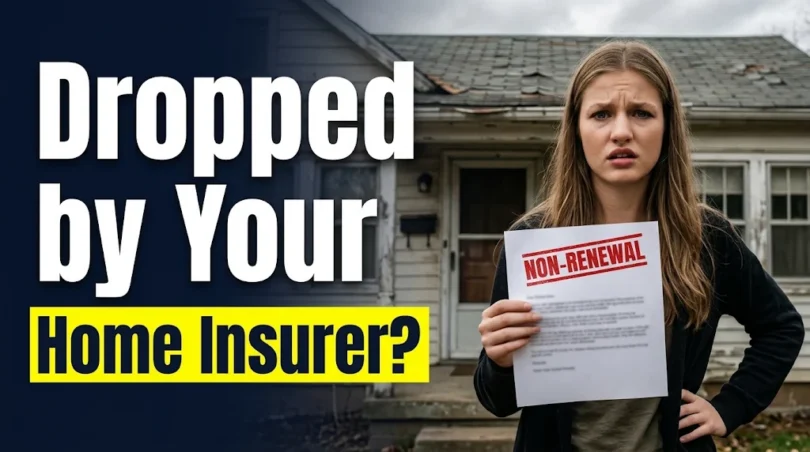
Federal and state data have shown non renewals rising in many states. Insurers may decide not to renew a policy because of:
- High wildfire, hurricane or hail risk in your area
- An older roof, often 15 to 20 years or more
- Prior claims, especially water or roof claims
- Outdated electrical, plumbing or heating systems
- Condition issues spotted in inspections, including aerial photos
- The insurer reducing its business in your state
Most states require insurers to give advance written notice of non renewal, often 30 to 120 days depending on the state, and to explain the reason.
What to Do if Your Rate Jumps
- Ask why. Call your agent and ask whether the increase was statewide, based on your home’s features or due to a coverage change.
- Check your coverage amount. Make sure your dwelling limit reflects actual rebuild cost, not inflated estimates, though avoid underinsuring.
- Raise your deductible. Moving from $1,000 to $2,500 or more can lower premiums noticeably. Make sure you have savings to cover it.
- Ask for discounts. Bundling, security systems, smoke and water leak detectors, new roofs, claims free history and storm protection features can all help.
- Shop around. Get quotes from national, regional and local insurers, ideally through an independent agent.
- Consider mitigation upgrades. Impact resistant roofing, storm shutters, roof straps and wildfire defensible space can reduce premiums in many states.
What to Do if You’re Non Renewed
- Read the notice carefully. Note the reason and the date your coverage ends.
- Ask if you can fix the issue. If the reason is a roof or condition problem, ask whether repairs would allow renewal.
- Start shopping immediately. Don’t wait until the last week. Work with an independent agent who can access multiple companies.
- Check surplus lines insurers. These companies insure higher risk properties and may offer coverage when standard insurers won’t, though protections differ.
- Look into your state’s FAIR plan or insurer of last resort. Most states have a program for homeowners who can’t find coverage, though coverage may be more limited and cost more.
- Tell your mortgage lender once you have new coverage. Lenders require continuous insurance and can buy expensive force placed coverage if yours lapses.
- Contact your state insurance department if you think the non renewal was improper or you can’t find coverage.
FAIR Plans and Insurers of Last Resort
Many states run Fair Access to Insurance Requirements plans, known as FAIR plans, or similar programs. Florida’s Citizens Property Insurance and the California FAIR Plan are well known examples. These programs provide basic coverage for homeowners who can’t find it elsewhere. They often cover fewer perils, such as fire only in some states, so homeowners may need a separate policy, sometimes called a difference in conditions policy, to cover liability, theft and water damage. Prices can be higher, and some programs have grown rapidly as private insurers pulled back.
Home Upgrades That Can Lower Premiums
| Upgrade | Why it helps |
|---|---|
| New or impact resistant roof | Reduces hail and wind claims; many insurers offer discounts |
| Roof straps, shutters and reinforced garage doors | Required or rewarded in hurricane areas |
| Wildfire defensible space and fire resistant materials | Some states require insurers to recognize mitigation |
| Smart water shutoff and leak detectors | Reduces water damage claims |
| Updated electrical, plumbing and HVAC | Reduces fire and water risk |
| Monitored alarm systems | Reduces theft and fire losses |
Some states offer grants for storm hardening, such as roof replacement programs. Check your state’s insurance or emergency management agency.
Things Not to Do
- Don’t drop coverage entirely, even if you own your home outright
- Don’t underinsure your home to save money; you could be left short after a disaster
- Don’t file small claims that could lead to non renewal
- Don’t let your policy lapse while you shop
- Don’t ignore inspection findings
A Quick Example
The Harrisons in Minneapolis open their renewal notice to find their premium jumping from $2,400 to $3,300. Their agent explains it is mostly a statewide increase due to hail losses, plus a higher rebuild cost estimate. They raise their deductible from $1,000 to $2,500, add a water leak sensor discount and get quotes from three other insurers. One offers similar coverage with an impact resistant roof discount they will qualify for after replacing their 18 year old roof. They schedule the roof replacement and switch insurers, bringing their premium down to about $2,700.
Understanding Your Renewal Notice
When your renewal arrives, don’t just look at the total premium. Compare these items with last year’s policy:
- Dwelling coverage (Coverage A): Many insurers raise this automatically each year to keep pace with construction costs. A higher limit means a higher premium.
- Deductibles: Some insurers switch to separate wind or hail deductibles, often a percentage of your dwelling limit such as 1 or 2 percent. On a $400,000 home, a 2 percent deductible is $8,000.
- Roof coverage: Some policies now pay only actual cash value for older roofs, which means depreciation is subtracted from a claim.
- Exclusions and endorsements: Check whether water backup, ordinance or law coverage, or other endorsements were removed or changed.
Sometimes a smaller premium increase hides a big reduction in coverage. Make sure you know what you are actually buying.
Should You Raise Your Deductible?
Raising your deductible is one of the quickest ways to lower a premium, but it only makes sense if you could comfortably pay that amount after a loss. A useful test is to compare the yearly savings with the extra amount you would pay in a claim. If raising your deductible from $1,000 to $2,500 saves $300 a year, you would break even in five years without a claim. Since many homeowners go years between claims, this trade can work well, as long as you keep the extra $1,500 in an emergency fund.
Why Small Claims Can Cost You More
Many homeowners don’t realize that filing claims can raise premiums or lead to non renewal. Insurers share claim history through databases such as the CLUE report, which typically shows claims from the past seven years. Even an inquiry about a possible claim can sometimes appear. As a general rule, consider paying for small losses yourself and save your insurance for larger damage that would strain your finances. Before filing, compare the repair cost with your deductible and think about whether the claim is worth a possible rate increase.
Working With an Independent Agent
When the market is tight, an independent agent can be especially helpful. Unlike captive agents who represent one company, independent agents can quote multiple insurers, including regional carriers that may not advertise widely. They also know which companies are currently writing new policies in your area and which are pulling back. Ask them to quote the same coverage across companies so you can compare price fairly.
If You Can’t Afford Coverage at All
If your premium has become truly unaffordable, talk to your agent about adjusting coverage rather than dropping it. Options might include a higher deductible, removing optional endorsements you don’t need or choosing actual cash value for certain items. If you have a mortgage, contact your lender before your coverage lapses, because force placed insurance usually costs much more. Some states also offer premium assistance or mitigation grants for eligible homeowners.
Will Home Insurance Prices Come Down?
No one can promise lower rates, but there are some signs of stabilization in parts of the country. Reinsurance prices have eased somewhat after their sharp climb, and some states have passed reforms aimed at reducing lawsuits and fraud. On the other hand, severe weather losses remain high, and construction costs are still elevated. For most homeowners, the practical approach is to assume premiums will keep rising modestly and focus on what you can control: your deductible, your discounts, your home’s condition and how often you shop.
What to Do Next
When your renewal arrives, compare the new premium and coverage with last year’s. Ask your agent to explain any increase, review your deductible and discounts, and get competing quotes. If you are non renewed, start shopping immediately and ask about your state’s FAIR plan as a backup. Investing in storm and water protection can help you stay insurable at a better price over the long run.
Sources
- Insurify: Home Insurance Rates Rise in First Half of 2026
- NAIC: Homeowners Insurance Market Data
- Insurance Information Institute: Trends in Homeowners Insurance
- Fair Access to Insurance Requirements (FAIR) Plans
This article is for general information only and is not insurance, financial or legal advice. Coverage, prices and rules vary by state, insurer and policy. Read your own policy and talk with a licensed insurance agent or professional about your situation.
Frequently Asked Questions
Will home insurance rates go down?
There is no guarantee. Some cost pressures have eased, but weather losses and rebuilding costs remain high, so many homeowners should plan for continued increases.
Can filing a claim raise my home insurance rate?
Yes. Claims, especially water and roof claims, can increase premiums or lead to non renewal.
What is a percentage deductible?
A deductible set as a percentage of your dwelling coverage, often used for wind, hail or hurricane damage. A 2 percent deductible on a $400,000 home is $8,000.
Why is home insurance going up so much?
Mainly severe weather losses, higher rebuilding costs and more expensive reinsurance, along with litigation and fraud in some states.
Can my insurer drop me for no reason?
Insurers can choose not to renew, but most states require advance written notice and a stated reason.
What is a FAIR plan?
A state program that provides basic property coverage to homeowners who can’t find insurance in the private market.
How can I lower my home insurance premium?
Raise your deductible, bundle, ask for discounts, make storm or water protection upgrades and compare quotes.
What happens if my home insurance lapses with a mortgage?
Your lender can buy force placed insurance, which is usually expensive and protects the lender more than you.
Does an older roof affect home insurance?
Yes. Older roofs can lead to higher premiums, reduced roof coverage or non renewal with some insurers.
Should I drop home insurance if my house is paid off?
It is generally risky. Without insurance, you would pay to rebuild and cover liability claims yourself.