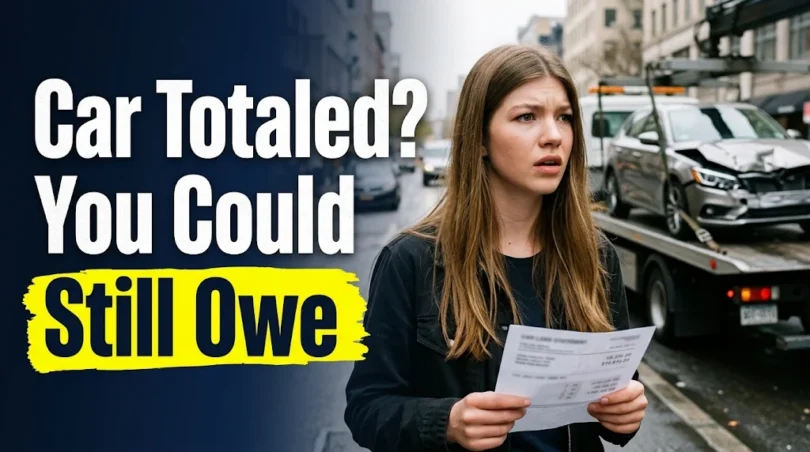

Gap insurance pays the difference between what your car is worth and what you still owe on your loan or lease if the car is totaled or stolen. Regular collision and comprehensive coverage only pay the car’s actual cash value, which can be thousands of dollars less than your loan balance, especially in the first few years. Without gap coverage, you could be left making payments on a car you no longer have.
Gap insurance is most useful if you made a small down payment, took a long loan, rolled old debt into a new loan or are leasing. Here is how it works, what it costs and how to avoid overpaying for it.
Why the “Gap” Happens
New cars lose value quickly. Many lose a large share of their value in the first year or two. Meanwhile, loan balances fall slowly at first, because early payments are mostly interest. That creates a period when you owe more than the car is worth, often called being upside down or having negative equity.
If the car is totaled during that period, your insurer pays its actual cash value minus your deductible. The lender still expects the full loan balance. The difference comes out of your pocket unless you have gap insurance.
A Simple Example
| Item | Amount |
|---|---|
| Loan balance at the time of the crash | $32,000 |
| Car’s actual cash value | $26,000 |
| Collision deductible | $1,000 |
| Insurance payout ($26,000 minus $1,000) | $25,000 |
| Amount still owed to lender | $7,000 |
With gap insurance, the $6,000 difference between the car’s value and the loan balance is usually covered. Many gap policies also cover the deductible, though some don’t. Without gap, you would owe the full $7,000 for a car you can no longer drive.
Who Should Consider Gap Insurance
- Small or no down payment: putting less than about 20 percent down makes negative equity more likely
- Long loans: loans of 60, 72 or 84 months pay down slowly
- Rolled over debt: if you added the balance from your old car to your new loan
- Leases: many leases require or include gap coverage
- Fast depreciating vehicles: some models lose value faster than others
- High mileage drivers: more miles mean faster depreciation
- High interest loans: balances fall more slowly
Who Probably Doesn’t Need It
- You made a large down payment, around 20 percent or more
- Your loan term is short, such as 36 months
- You owe less than the car is worth
- You paid cash or could easily cover a shortfall from savings
- You are buying a used car that has already done most of its depreciating
What Gap Insurance Covers and Doesn’t
| Usually covered | Usually not covered |
|---|---|
| Difference between actual cash value and loan or lease balance after a total loss | Repairs when the car isn’t totaled |
| Total loss from theft | Your deductible, in some policies |
| Deductible, in some policies | Overdue payments and late fees |
| Extended warranties or add ons rolled into the loan | |
| Negative equity above a policy’s cap | |
| A down payment on your next car |
Many gap policies cap coverage at a percentage of the car’s value, often around 25 percent. If you rolled a lot of old debt into the loan, the gap could exceed that cap. Read the limits before buying.
Where to Buy Gap Insurance
From your car insurer
Many auto insurers offer gap coverage as an add on to your policy if you carry collision and comprehensive. It is often the cheapest option, typically adding a modest amount to your yearly premium. You can usually drop it once you no longer owe more than the car is worth.
From the dealership
Dealers often offer gap coverage, technically called a guaranteed asset protection waiver or product, at the time of sale. It is convenient, but it is often much more expensive, and the cost is usually added to your loan, so you pay interest on it. The price is sometimes negotiable.
From your lender or credit union
Some banks and credit unions offer gap coverage at a lower price than dealerships.
| Source | Typical cost | Pros | Cons |
|---|---|---|---|
| Auto insurer | Often lowest; small annual add on | Easy to cancel; no interest | Not every insurer offers it; may require new cars |
| Dealership | Often several hundred dollars or more, one time | Convenient; covers some situations insurers don’t | Often rolled into the loan with interest |
| Credit union or bank | Usually moderate | Cheaper than many dealers | Only if you finance there |
Gap Insurance on a Lease
Leasing companies usually require gap protection because you never build equity in a leased car. Many leases include it in the monthly payment. Check your lease agreement before buying separate gap coverage so you don’t pay for it twice.
Loan Lease Payoff Coverage
Some insurers offer a similar product called loan or lease payoff coverage. It typically pays up to a percentage above the car’s actual cash value, often 25 percent. It works much like gap coverage but may have a lower cap. Ask your insurer exactly how much it pays.
When to Cancel Gap Insurance
Gap coverage is only useful while you owe more than the car is worth. Check every six months or so:
- Look up your loan payoff amount
- Look up your car’s current value on a pricing guide
- If the value is higher than the payoff amount, you can drop gap coverage
If you bought gap through a dealer and paid upfront, you may be entitled to a prorated refund when you pay off the loan early, sell or trade in the car. Contact the gap provider and ask.
What Happens After a Total Loss
- Your auto insurer declares the car a total loss and pays its actual cash value, minus your deductible, usually directly to your lender
- You file a gap claim with the gap provider, with the settlement letter, loan statement and police report
- The gap provider pays the remaining balance to the lender, up to the policy limits
- You confirm with the lender that the loan is paid in full
Keep making loan payments until the lender confirms payoff, to avoid late fees and credit damage while the claims are processed.
How Insurers Decide Your Car Is Totaled
Gap coverage only applies when your car is declared a total loss, so it helps to know how that decision is made. An insurer usually totals a car when repair costs plus its salvage value come close to or exceed the car’s actual cash value. Many states set a total loss threshold, such as damage reaching 70 or 75 percent of the car’s value, while others use a formula. Because modern repairs are expensive, cars are totaled more often than many owners expect, even after crashes that don’t look catastrophic.
The actual cash value the insurer offers is based on comparable vehicles for sale in your area, adjusted for mileage, condition and options. If the offer seems low, you can send listings for similar cars and ask the adjuster to reconsider. A higher settlement also reduces the gap your gap coverage needs to pay.
Dealer Gap Products: What to Watch For
Dealer offered gap products can be legitimate and useful, but a few points deserve attention:
- Price: ask for the exact cost and whether it is being added to your loan
- Negotiation: the price is often negotiable, and you can decline it entirely
- Coverage cap: check the maximum it will pay, often expressed as a percentage of the car’s value
- Deductible coverage: some pay your deductible, others don’t
- Refund rules: ask how to get a prorated refund if you sell the car or pay off the loan early
- Bundled extras: make sure it isn’t packaged with other products you don’t want
Federal regulators have warned about add on products being sold without clear disclosure. You have the right to understand what you are buying and to say no.
Gap Insurance and Negative Equity Trade Ins
If you trade in a car you are upside down on, the dealer may roll the remaining balance into your new loan. That instantly creates a large gap on the new car. Many gap policies cap how much negative equity they will cover, so a big rolled over balance may not be fully protected. In this situation, a larger down payment or waiting until you owe less on your current car can protect you better than gap insurance alone.
Ways to Avoid Needing Gap Insurance
- Make a down payment of 20 percent or more
- Choose a shorter loan term
- Avoid rolling negative equity from your old car into a new loan
- Consider a lightly used car that has already lost much of its value
- Pay extra toward principal early in the loan
A Quick Example
Ashley buys a new SUV for $38,000 with $1,000 down and a 72 month loan. Eleven months later, the SUV is totaled in a crash. Her insurer values it at $29,500 and pays $28,500 after her $1,000 deductible. Her loan balance is $34,200. Her gap coverage, which she added through her car insurer for a small yearly cost, pays the remaining $5,700, including her deductible. Without it, she would have owed $5,700 on a car that no longer exists, while also needing money for another vehicle.
Questions to Ask Before Buying
- Does my auto insurer offer gap or loan payoff coverage, and what does it cost?
- Is there a cap on how much it pays?
- Does it cover my deductible?
- Does it require me to carry collision and comprehensive?
- Can I cancel anytime, and will I get a refund?
- Does my lease already include gap protection?
What to Do Next
If you are buying or leasing a car with a small down payment or a long loan, ask your car insurer for a gap quote before you go to the dealership. Compare it with the dealer’s price, and don’t let the dealer roll an expensive policy into your loan without checking. Once your loan balance drops below your car’s value, cancel the coverage and stop paying for it.
Sources
- Insurance Information Institute: What Is Gap Insurance?
- Consumer Financial Protection Bureau: Guaranteed Asset Protection
- Kelley Blue Book: Car Values
This article is for general information only and is not insurance, financial or legal advice. Coverage, prices and rules vary by state, insurer and policy. Read your own policy and talk with a licensed insurance agent or professional about your situation.
Frequently Asked Questions
Can I buy gap insurance after I buy the car?
Often yes, through your auto insurer, though many insurers require the car to be fairly new and you to be the original owner or loan holder.
How long should I keep gap insurance?
Until your loan balance falls below the car’s market value, which often takes a few years on a long loan.
Does gap insurance cover theft?
Yes. If your car is stolen and not recovered, it is treated as a total loss, and gap coverage can pay the remaining balance.
Is gap insurance required by law?
No. It isn’t required by state law, but some lenders and most leasing companies require it.
What does gap insurance cover?
It pays the difference between your car’s actual cash value and what you owe on your loan or lease if the car is totaled or stolen.
Is gap insurance worth it?
It is usually worth it if you made a small down payment, have a long loan, rolled over old debt or are leasing.
Where is gap insurance cheapest?
Adding it to your car insurance policy is often cheapest. Dealership gap products can cost much more, especially if financed.
Does gap insurance cover my deductible?
Some policies do and some don’t. Check the terms before buying.
Can I cancel gap insurance?
Yes. Cancel it once you owe less than the car is worth, and ask about a prorated refund if you paid upfront.
Do I need gap insurance on a used car?
Less often, since used cars depreciate more slowly, but it can still help if you financed most of the price over a long term.
Does a lease include gap insurance?
Many do. Check your lease agreement before buying separate coverage.