
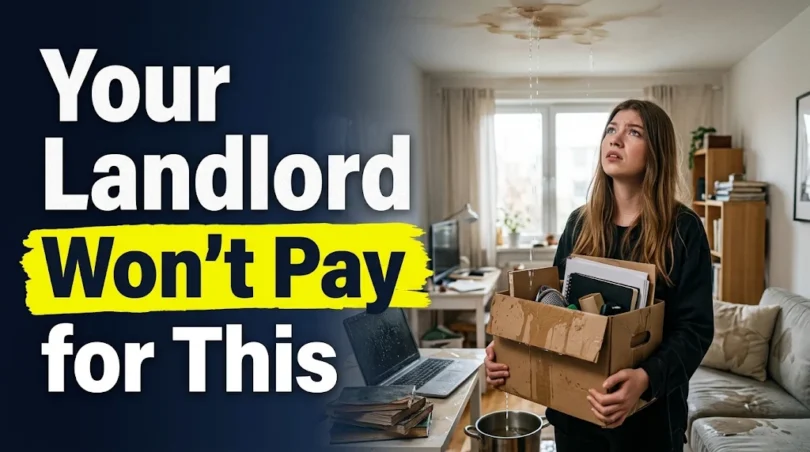

Renters insurance covers your personal belongings, your liability if you accidentally hurt someone or damage their property, and extra living costs if your rental becomes unlivable after a covered event like a fire. Your landlord’s insurance covers the building itself, not your furniture, clothes or electronics, and not your legal responsibility to others. Renters insurance is usually inexpensive, often somewhere around $15 to $30 a month depending on where you live and how much coverage you choose.
Many renters skip it because they think they don’t own much. But replacing everything you own, from your bed to your laptop to your clothes, usually costs far more than people expect. Here is what renters insurance covers and how to choose the right policy.
What Renters Insurance Covers
| Coverage | What it protects |
|---|---|
| Personal property | Your belongings: furniture, clothes, electronics, kitchenware, bikes |
| Personal liability | Injuries to others and damage to their property that you’re responsible for, including legal costs |
| Loss of use | Hotel, temporary rent and extra costs if your rental is unlivable after a covered loss |
| Medical payments to others | Small medical bills for guests injured in your home, regardless of fault |
Covered Causes of Loss
Most renters policies cover belongings against a list of named perils, which usually includes:
- Fire and smoke
- Theft and vandalism
- Windstorm and hail
- Lightning and explosion
- Water damage from burst pipes or appliances
- Damage from vehicles or aircraft
- Weight of ice, snow or sleet
- Sudden electrical surges
What Renters Insurance Usually Doesn’t Cover
- Floods: buy contents only flood insurance separately
- Earthquakes: separate coverage or endorsement
- Pest damage: bedbugs, rodents and insects
- Your roommate’s belongings: unless they are named on your policy
- The building itself: that is the landlord’s responsibility
- Your car: covered by auto insurance, though belongings stolen from your car are often covered by renters insurance
- Business equipment: often limited unless you add coverage
- Intentional damage
Your Belongings Are Covered Away From Home
One of the most useful features of renters insurance is that personal property coverage usually follows you. A laptop stolen from a coffee shop, a bike stolen from a bike rack, or luggage stolen while traveling can be covered, subject to your deductible and any limits.
Liability Coverage Matters More Than You Think
Personal liability coverage often matters even more than belongings coverage. Examples include:
- A guest trips over a rug in your apartment and breaks a wrist
- Your bathtub overflows and damages the unit below
- Your dog bites someone at the park
- You accidentally start a kitchen fire that damages other units
Without coverage, you could be personally responsible for medical bills, repairs and legal costs. Most policies offer $100,000 to $300,000 or more in liability coverage. Many landlords require renters to carry at least $100,000.
How Much Does Renters Insurance Cost?
Renters insurance is one of the cheapest types of insurance. Typical prices are often in the range of $15 to $30 a month, though it can be lower or higher depending on:
- Your location and local crime and weather risks
- Coverage amounts
- Your deductible
- Whether you choose replacement cost or actual cash value
- Your claims history and, in many states, your credit based insurance score
- Discounts such as bundling with auto insurance
Bundling renters with car insurance often earns a multi policy discount that can offset a large share of the renters premium.
How Much Coverage Do You Need?
Personal property
Walk through your home and estimate what it would cost to replace everything. Many people are surprised. A typical one bedroom apartment can easily contain $20,000 to $40,000 worth of belongings once you add furniture, clothing, electronics, kitchen items and personal gear. A home inventory app or a quick video of each room makes this easier.
Liability
Many advisors recommend at least $300,000 if you can afford it, especially if you have savings or other assets to protect.
Deductible
Choose a deductible you could pay easily, often $500 or $1,000. A higher deductible lowers your premium.
Replacement Cost vs Actual Cash Value
This choice makes a big difference after a claim.
- Actual cash value pays what your belongings were worth at the time of loss, after depreciation. A four year old laptop might be worth only a fraction of its original price.
- Replacement cost pays to buy new, similar items. It usually costs a little more but pays out much better.
For most renters, replacement cost coverage is worth the small extra premium.
Special Limits on Valuables
Policies set lower limits for certain items, such as jewelry, watches, cash, firearms, collectibles and sometimes expensive electronics. If you own an engagement ring or valuable camera gear, ask about scheduling those items separately for full coverage.
Roommates and Renters Insurance
Roommates usually need their own policies. Some insurers allow roommates on one policy, but that can create problems: a claim by one roommate affects the policy history for both, and shared liability limits can be split. Separate policies are usually cleaner and still inexpensive.
Is Renters Insurance Required?
No state law requires renters insurance, but many landlords require it in the lease, often with a minimum liability amount. Even if it isn’t required, it protects you in ways the landlord’s policy doesn’t.
Useful Add Ons for Renters
- Scheduled personal property: full coverage for jewelry, cameras, instruments or collectibles
- Earthquake coverage: important in parts of California, the Pacific Northwest and other seismic areas
- Identity theft coverage: helps pay costs of restoring your identity
- Water backup: covers damage from backed up drains or sewers in some policies
- Pet liability: some policies limit dog bite coverage or exclude certain breeds, so check if you have a dog
- Home business coverage: for equipment and liability if you work from home
Renters Insurance for Students
College students living in dorms are sometimes covered under their parents’ homeowners policy, often up to a percentage of the parents’ personal property limit, and usually only while they are full time students. Students living off campus in apartments often need their own renters policy. Check the parents’ policy first, then compare the cost of a separate renters policy, which is usually inexpensive and avoids claims on the parents’ homeowners policy.
What Landlords Can and Can’t Require
Landlords can generally require tenants to carry renters insurance and set a minimum liability amount, and they may ask to be listed as an interested party so they are notified if the policy is canceled. They usually can’t require you to buy from a specific insurer, though rules vary by state. Some landlords offer their own tenant liability programs, which protect the landlord but may not cover your belongings. Compare those programs with a full renters policy before choosing.
Keep Proof of What You Own
Claims go faster when you can show what you owned and what it was worth. Easy ways to keep proof:
- Record a slow video walking through each room, opening closets and drawers
- Save digital receipts and order confirmations in one email folder
- Photograph serial numbers on electronics and appliances
- Store everything in cloud storage so it survives a fire or theft
- Update your inventory once a year or after big purchases
Without proof, adjusters may pay less for items they can’t verify.
Does a Claim Raise Your Renters Insurance?
A claim can raise your premium or affect future eligibility, especially multiple claims in a short time. For small losses close to your deductible, paying out of pocket may make sense. For larger losses like a fire or burglary, filing a claim is exactly what the coverage is for.
Moving? Your Coverage Can Come With You
When you move, call your insurer to update your address so your policy covers the new place from day one. Many renters policies cover belongings while they are in transit, though coverage for items in a moving truck can be limited, especially if a moving company is responsible for damage. Ask your insurer about moving coverage and check the mover’s liability terms. Your premium may change based on the new location’s risks.
Questions to Ask When Buying
- Is personal property covered at replacement cost or actual cash value?
- What are the special limits on electronics, jewelry and bikes?
- Does the policy cover belongings away from home and in storage?
- Are there dog breed restrictions on liability coverage?
- What discounts are available for bundling, security devices or paying in full?
How to File a Renters Insurance Claim
- Make sure everyone is safe and contact police for theft or vandalism
- Notify your landlord about damage to the unit
- Take photos and video of damage
- Make a list of damaged or stolen items with estimated values
- Gather receipts, bank statements or photos showing ownership
- Contact your insurer to start the claim
- Keep receipts for hotel stays and extra expenses if you can’t live in the unit
A Quick Example
Jasmine rents a one bedroom apartment in Chicago and pays about $18 a month for renters insurance with $30,000 in replacement cost property coverage and $300,000 in liability. A fire starts in the unit above hers, and smoke and water ruin her couch, mattress, clothes and TV. She stays with a friend for a week, then in a short term rental while the building is repaired. Her policy replaces her belongings at today’s prices, minus her $500 deductible, and pays the extra housing costs. Without it, she would have paid thousands of dollars out of pocket to start over.
Common Mistakes
- Underestimating the value of belongings
- Choosing actual cash value to save a few dollars
- Assuming the landlord’s insurance covers your things
- Sharing a policy with roommates without understanding the risks
- Not updating coverage after buying expensive items
- Skipping flood coverage in flood prone areas
What to Do Next
Take a quick video of every room in your apartment to create a home inventory. Estimate the cost to replace everything, then get two or three renters insurance quotes with replacement cost coverage and at least $300,000 in liability. If you have car insurance, ask about a bundle discount. For a small monthly cost, renters insurance can save you from a very expensive fresh start.
Sources
- Insurance Information Institute: Renters Insurance
- NAIC: Consumer’s Guide to Renters Insurance
- FEMA FloodSmart: Flood Insurance for Renters
This article is for general information only and is not insurance, financial or legal advice. Coverage, prices and rules vary by state, insurer and policy. Read your own policy and talk with a licensed insurance agent or professional about your situation.
Frequently Asked Questions
Does renters insurance cover my pet?
It doesn’t pay vet bills, but liability coverage often helps if your pet injures someone, subject to breed rules.
Does renters insurance cover water damage?
It covers sudden water damage like burst pipes or appliance leaks, but not flooding from rising water.
Can I cancel renters insurance anytime?
Yes. You can usually cancel at any time and receive a refund of unused premium, though your lease may require continuous coverage.
How much renters insurance coverage do I need?
Enough personal property coverage to replace everything you own, often $20,000 to $40,000 or more, plus at least $100,000 to $300,000 in liability.
Does renters insurance cover my laptop?
Yes, usually under personal property, including when it is stolen away from home, subject to your deductible and any electronics limits.
Does renters insurance cover my landlord's building?
No. The landlord’s policy covers the building. Renters insurance covers your belongings, liability and extra living costs.
How much is renters insurance a month?
Often around $15 to $30 a month, depending on your location, coverage amount, deductible and discounts.
Does renters insurance cover theft from my car?
Usually yes. Belongings stolen from your car are typically covered under personal property, subject to your deductible.
Does renters insurance cover my roommate?
Not unless they are named on the policy. Roommates usually need their own coverage.
Is renters insurance required?
No law requires it, but many landlords require it in the lease.
Does renters insurance cover floods?
No. You need separate contents only flood insurance.
Does renters insurance cover bedbugs?
Usually not. Pest infestations are generally excluded.