
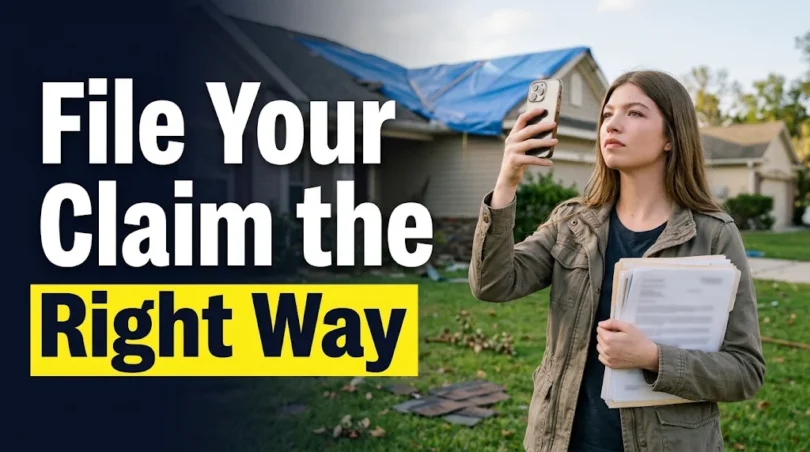

To file a home insurance claim, first make sure everyone is safe, then prevent further damage with reasonable temporary repairs. Document everything with photos and video before cleaning up, contact your insurer or agent to report the claim as soon as possible, and get a claim number. Make a detailed list of damaged property, keep receipts for emergency repairs and living expenses, and meet the adjuster when they inspect. Review the settlement offer carefully, and if it seems too low, ask for an explanation and provide additional evidence before accepting.
A claim is often the moment you find out how well your policy really works. The steps below can help you avoid common mistakes and get what your policy promises.
Step 1: Make Sure Everyone Is Safe
Safety comes first. If there is a fire, gas leak, flooding or structural damage, leave the home and call emergency services. Don’t enter a damaged structure until it is safe. If utilities are damaged, turn off power, gas or water if you can do so safely, or call the utility company.
Step 2: Prevent Further Damage
Most policies require you to take reasonable steps to protect your property from additional damage. Insurers may not pay for damage that gets worse because you didn’t act. Examples include:
- Placing a tarp over a damaged roof
- Boarding up broken windows or doors
- Shutting off the water main after a burst pipe
- Removing standing water and running fans or dehumidifiers
- Moving undamaged belongings to a dry, secure place
Keep receipts for supplies and emergency services, because these costs are often reimbursable. Avoid permanent repairs until the insurer has inspected, unless your insurer approves them.
Step 3: Document the Damage
Before you clean up or throw anything away, take photos and video of every damaged area and item. Good documentation is one of the most powerful tools you have.
- Take wide shots of each room, then close ups of specific damage
- Photograph the source of damage, such as a fallen tree or burst pipe
- Record serial numbers and model numbers of damaged electronics and appliances
- Keep damaged items if possible until the adjuster sees them
- Note the date and time of the event and any weather reports
If you must discard items for health reasons, such as wet carpet that could grow mold, photograph them first and keep a small sample if you can.
Step 4: Report the Claim Promptly
Call your insurer, use its app or website, or contact your agent. Many policies require prompt notice, and delays can make it harder to prove what happened. When you report the claim:
- Have your policy number ready
- Describe what happened, when and where
- Ask for a claim number and the name and contact information of your adjuster
- Ask what your policy covers for this type of loss and what your deductible is
- Ask whether you have coverage for additional living expenses if you can’t stay in your home
Stick to the facts. Don’t guess about causes you are unsure of, and don’t say the damage has been there a long time if you don’t know.
Step 5: Keep a Claim Journal
Write down every conversation with your insurer, including the date, the person you spoke to and what was said. Save emails and letters. Keep a folder, paper or digital, with your policy, photos, receipts, estimates and correspondence. If questions come up later, a clear record is very helpful.
Step 6: Track Additional Living Expenses
If your home is unlivable, your policy’s loss of use coverage, often called additional living expenses or ALE, may pay the extra costs of living elsewhere. That can include hotel or rental costs, extra food costs above your normal grocery bill and extra travel costs. Keep every receipt. ALE usually has a dollar limit or time limit, so ask about both early.
Step 7: Make a Detailed Inventory
List every damaged or destroyed item, including:
| Item | Description | Age | Original price | Replacement cost |
|---|---|---|---|---|
| Television | Brand, model, 55 inch | 4 years | $700 | $650 |
| Area rug | Wool, 8 by 10 | 6 years | $900 | $1,000 |
| Dining chairs | Set of 4, solid wood | 8 years | $800 | $1,100 |
Use receipts, bank or credit card statements, online order history and photos to prove ownership. A home inventory made before the loss makes this step much easier.
Step 8: Meet the Adjuster
The insurance company will usually send an adjuster to inspect the damage or ask for a virtual inspection. Be present if you can. Walk through every area of damage, including less obvious problems like water stains on ceilings or damage in the attic. Share your photos, inventory and any contractor estimates you have.
Ask the adjuster how the damage will be valued, whether your policy pays replacement cost or actual cash value, and when you can expect a written estimate.
Step 9: Get Your Own Estimates
Getting one or two estimates from licensed, reputable contractors gives you something to compare with the insurer’s estimate. Be wary of contractors who show up uninvited after storms, ask for large payments up front or ask you to sign over your insurance benefits. Check licenses and reviews before hiring.
Step 10: Review the Settlement Carefully
When you receive the insurer’s estimate or settlement offer, compare it line by line with your contractor’s estimate. Look for missing items, low labor rates, low quantities or depreciation that seems too high. If something looks wrong:
- Ask the adjuster to explain how each figure was calculated
- Send your contractor’s estimate and any additional documentation
- Request a re-inspection if damage was missed
- Put your concerns in writing
If your mortgage lender is listed on the policy, settlement checks for dwelling damage may be made out to both you and the lender. The lender may hold the funds and release them as repairs are completed.
What If Your Claim Is Denied or Underpaid?
- Ask for the denial in writing with the specific policy language the insurer is relying on.
- Review your policy to see whether the exclusion really applies.
- Submit additional evidence, such as expert reports or contractor statements.
- Use the appraisal clause if your policy has one. It allows each side to hire an appraiser to settle disagreements over the amount of loss.
- File a complaint with your state insurance department if you believe the insurer is acting unfairly or delaying.
- Consider a public adjuster or attorney for large or complex claims. Public adjusters work for you and usually charge a percentage of the settlement, so weigh the cost.
Common Claim Mistakes
- Throwing away damaged items before they are documented
- Waiting weeks to report damage
- Making permanent repairs before the inspection
- Accepting the first offer without reviewing it
- Not keeping receipts for emergency repairs and living costs
- Signing contracts with unlicensed storm chasers
- Missing policy deadlines for proof of loss or recoverable depreciation
When You Shouldn’t File a Claim
Sometimes filing a claim isn’t worth it. If the damage costs only a little more than your deductible, a claim might raise your premium or count against you at renewal. Claims are recorded in shared databases and can affect future pricing for years. Consider paying small losses yourself, and save your insurance for significant damage.
A Quick Example
After a spring hailstorm, Teresa notices dents on her gutters and missing shingles. She photographs the roof from the ground, tarps a leaking area and calls her insurer the next day. She keeps receipts for the tarp and a roofer’s emergency visit. The adjuster’s estimate covers the roof but leaves out the gutters and a damaged skylight. Teresa sends her roofer’s estimate and photos showing the dents and cracked skylight. The insurer re-inspects and adds $2,800 to the settlement.
Claim Steps for Common Types of Damage
Water damage
Stop the source first by shutting off the water. Remove standing water quickly and dry the area, because mold can begin growing within a day or two. Keep in mind that standard policies usually cover sudden and accidental water damage, like a burst pipe, but not gradual leaks or flooding from outside. Flood damage requires separate flood insurance.
Storm and hail damage
Look for missing shingles, dents on gutters and siding, broken windows and damaged outdoor equipment. Avoid climbing onto a damaged roof yourself. Check whether your policy has a separate wind or hail deductible, which may be a percentage of your dwelling limit.
Fire and smoke damage
Don’t enter until the fire department says it is safe. Smoke and soot damage can extend well beyond the burned area, including clothing, upholstery and HVAC systems. Ask your insurer about professional cleaning and whether your additional living expenses coverage applies.
Theft and vandalism
File a police report right away and get a copy or report number, since most insurers require it. List stolen items with receipts, photos and serial numbers. Repair broken locks or windows promptly to secure the home.
Understanding the Proof of Loss
Some insurers ask for a sworn proof of loss, a signed statement listing what was damaged and how much you are claiming. It often comes with a deadline, sometimes 60 days after the insurer requests it. Read it carefully, fill it out completely and keep a copy. If you are not finished counting your losses, ask whether you can submit a supplemental claim later.
How Long Does a Home Insurance Claim Take?
Simple claims may be settled in a few weeks. Larger claims, especially after widespread disasters when adjusters are stretched thin, can take months. Many states set deadlines for insurers to acknowledge a claim, begin investigating and pay or deny it after receiving proof of loss. If your claim stalls, follow up in writing, ask for a timeline and contact your state insurance department if delays continue without explanation.
Keep Your Mortgage Lender in the Loop
If you have a mortgage, contact your loan servicer early. Many servicers have a loss draft department that manages insurance checks for dwelling repairs. They may require contractor estimates, signed contracts and inspections before releasing money in stages. Knowing their process ahead of time can prevent delays when your contractor is ready to start work.
What to Do Next
Before you ever need to file a claim, create a home inventory with photos and video, save digital copies of your policy and receipts in the cloud, and learn your deductibles and claim reporting process. If damage happens, follow the steps above: stay safe, prevent more damage, document everything, report promptly and review the settlement carefully before you accept.
Sources
- NAIC: What to Do After a Disaster
- Insurance Information Institute: How to File a Homeowners Claim
- United Policyholders: Claim Help
- FEMA: Documenting Damage
This article is for general information only and is not insurance, financial or legal advice. Coverage, prices and rules vary by state, insurer and policy. Read your own policy and talk with a licensed insurance agent or professional about your situation.
Frequently Asked Questions
How long does a home insurance claim take?
Simple claims may take a few weeks, while large or disaster related claims can take months. Many states set deadlines for insurers to respond.
Do I need a police report for a theft claim?
Usually yes. Most insurers require a police report or report number for theft and vandalism claims.
How soon should I file a home insurance claim?
As soon as possible. Many policies require prompt notice, and quick reporting helps document the loss.
Should I clean up before the adjuster comes?
Take steps to prevent further damage, but document everything with photos and video first and avoid permanent repairs until the insurer inspects.
What does an insurance adjuster do?
An adjuster inspects the damage, reviews your policy and estimates how much the insurer will pay.
Can I negotiate a home insurance settlement?
Yes. You can provide contractor estimates and more evidence and ask the insurer to reconsider.
What is the appraisal clause?
A policy provision that lets you and the insurer each hire an appraiser to resolve disputes over the amount of a loss.
Will filing a claim raise my premium?
It can, especially for water or roof claims or multiple claims in a short time.
What is a public adjuster?
A licensed professional who represents you in a claim for a fee, usually a percentage of the settlement.