
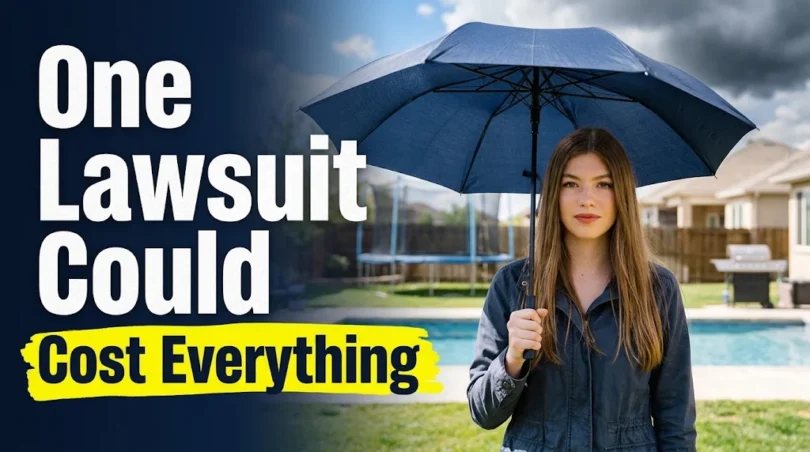

Umbrella insurance is extra liability coverage that kicks in after the liability limits on your auto, home or renters policy are used up. It protects your savings, home and future income if you are sued for a serious accident, such as a car crash that injures several people or a guest who is badly hurt at your home. Policies usually start at $1 million of coverage, and the first million often costs a few hundred dollars a year, though prices vary by insurer, location and the number of drivers and properties you insure.
Many people assume umbrella policies are only for the wealthy. In reality, anyone with assets to protect, or future wages that could be garnished, may benefit. Here is how umbrella insurance works and how to decide whether you need it.
How Umbrella Insurance Works
Imagine you cause a crash that seriously injures another driver, and a court awards $900,000 in damages. If your auto policy’s liability limit is $300,000, that policy pays $300,000. Without an umbrella policy, you could be personally responsible for the remaining $600,000. With a $1 million umbrella policy, it pays the remaining $600,000, up to its limit.
Umbrella policies are called excess coverage because they sit on top of your existing policies. To buy one, insurers usually require you to carry certain minimum liability limits on your underlying policies, such as $250,000 or $300,000 per person on auto and $300,000 on home.
What Umbrella Insurance Covers
- Bodily injury liability: injuries to others that you are responsible for
- Property damage liability: damage to other people’s property
- Legal defense costs: often paid in addition to the policy limit
- Personal injury claims: such as libel, slander, defamation, false arrest and invasion of privacy, which many home policies don’t cover
- Worldwide coverage: many policies apply anywhere in the world
- Some claims excluded by underlying policies, depending on the policy
What It Usually Doesn’t Cover
- Your own injuries or damage to your own property
- Business activities and professional liability
- Intentional acts or criminal behavior
- Contracts you signed
- Certain high risk vehicles or watercraft unless listed
- Claims between members of your household
Situations Where Umbrella Coverage Helps
| Situation | Why it can exceed normal limits |
|---|---|
| You cause a multi car crash | Several injured people can quickly exceed auto limits |
| A guest is seriously injured at your home | Medical bills and lost wages can be very large |
| Your dog badly injures someone | Serious bite injuries can lead to big awards |
| Your teen driver causes a serious crash | Young drivers have higher crash risk |
| Someone is hurt in your pool or on a trampoline | Serious injuries, often to children |
| You post something online that leads to a defamation suit | Many home policies exclude personal injury claims |
| You own a rental property and a tenant’s guest is hurt | Some umbrellas extend to listed rentals |
Who Should Consider Umbrella Insurance?
- Homeowners with significant equity
- People with substantial savings or investments
- Households with teen drivers
- Owners of pools, trampolines, boats or recreational vehicles
- Dog owners, especially of larger breeds
- Landlords with rental properties
- People who host frequent gatherings
- Public figures, coaches, volunteers and people active on social media
- High earners, whose future wages could be at risk in a judgment
Even if you don’t have large assets today, a judgment can sometimes follow you for years, and in some states wages can be garnished. An umbrella policy can protect your future, not just your current savings.
How Much Umbrella Coverage Do You Need?
A common rule of thumb is to buy enough coverage to protect your net worth, meaning your assets minus debts, plus some protection for future income. Policies are typically sold in $1 million increments.
| Your situation | Common starting point |
|---|---|
| Moderate assets, no special risks | $1 million |
| Home equity plus savings over $1 million, or teen drivers | $2 million |
| High net worth, rental properties, pools or boats | $3 million to $5 million or more |
Think about the worst realistic lawsuit you could face, not just your assets. Serious injury cases can exceed $1 million.
How Much Does It Cost?
Umbrella insurance is often one of the best values in insurance because large claims are rare. The first $1 million commonly costs a few hundred dollars a year, and each additional million usually costs less than the first. Your price depends on:
- Number of drivers, especially young or high risk drivers
- Number of vehicles, homes and rental properties
- Pools, trampolines, dogs, boats and recreational vehicles
- Your claims and driving history
- Where you live
Remember to factor in any cost of raising your underlying auto and home limits to meet the umbrella’s requirements.
Where to Buy Umbrella Insurance
Most people buy umbrella coverage from the same company that insures their home and car, since many insurers require it and offer bundle discounts. Some insurers sell standalone umbrella policies, which can help if your home and auto are with different companies. An independent agent can compare options.
Why Liability Claims Can Get So Large
People often underestimate how big a serious injury claim can become. A single person with a spinal injury or brain injury may need surgeries, rehabilitation, home modifications and ongoing care for decades. If they can no longer work, lost future earnings can add hundreds of thousands of dollars more. Add pain and suffering, and the total can easily pass $1 million. When several people are hurt in one crash, standard auto limits can be used up almost immediately. Umbrella coverage exists for exactly these rare but devastating situations.
Umbrella Insurance and Your Teen Driver
Adding a teen driver is one of the most common reasons families buy an umbrella policy. Young drivers crash more often than experienced drivers, and parents who own the car or co sign a teen’s license can face liability for crashes. An umbrella policy adds an extra layer of protection during these higher risk years. Expect the umbrella price to rise when a teen is added, but it is often still modest compared with what is at stake.
Landlords and Umbrella Coverage
If you own rental properties, an umbrella can extend over the liability coverage on your landlord policies, as long as each property is listed and meets the insurer’s requirements. Tenants and their guests can be injured on stairs, balconies or icy walkways, and landlords are frequent lawsuit targets. Some insurers limit how many rental units their personal umbrella will cover, so landlords with several properties may need a commercial umbrella or an LLC structure with business coverage. Ask your agent which approach fits your situation.
Umbrella vs Higher Underlying Limits
You might wonder whether to simply raise your auto and home liability limits instead. Most auto policies cap liability at $500,000 or similar, and raising limits on each policy separately can cost more than adding an umbrella. An umbrella also covers some claims your underlying policies don’t, like defamation, and applies across all your policies at once. For most families, carrying the minimum underlying limits the umbrella requires, plus an umbrella, is the most cost effective way to get high liability protection.
Questions to Ask Before Buying
- What underlying liability limits do you require on auto, home and any boats or rentals?
- Are legal defense costs paid in addition to the policy limit?
- Does the policy cover personal injury claims like defamation and invasion of privacy?
- Are there exclusions for certain dog breeds, trampolines or recreational vehicles?
- Does coverage apply worldwide?
- How many rental properties can be included?
- What discount do I get for bundling the umbrella with home and auto?
How Claims Work Under an Umbrella
If you are sued, notify both your underlying insurer and your umbrella insurer right away, even if the claim seems small. Your auto or home insurer usually handles the defense first. If the claim could exceed those limits, the umbrella insurer gets involved. Late notice can cause problems with coverage, so report any serious incident promptly.
Common Mistakes
- Assuming you are not wealthy enough to be sued
- Not meeting the umbrella’s required underlying limits, creating a gap
- Forgetting to list all drivers, vehicles, boats and properties
- Assuming the umbrella covers business activities
- Choosing coverage based only on today’s assets, ignoring future income
Understanding the Gap Risk
If your umbrella requires $300,000 of auto liability and you only carry $100,000, the umbrella generally won’t pay until the first $300,000 is reached. That leaves you personally responsible for the $200,000 in between. Always match your underlying limits to the umbrella’s requirements.
A Quick Example
The Thompsons live in Phoenix, own a home with $350,000 in equity, have $200,000 in retirement savings and a 17 year old son who just started driving. Their son runs a red light and injures two people, one seriously. The claims total $1.1 million. Their auto policy pays its $250,000 per person and $500,000 per accident limits, covering $500,000. Their $1 million umbrella policy covers the remaining $600,000. Without it, their home equity and savings would have been at risk. Their umbrella cost about the same per year as a few nights out at restaurants.
Umbrella Insurance for Renters
Renters can buy umbrella policies too, usually paired with renters and auto insurance. If you have savings, a good income or a teen driver, an umbrella can be worth it even without owning a home.
What to Do Next
Add up your net worth and think about your biggest liability risks, like teen drivers, a pool, a dog or rental properties. Check your current auto and home liability limits. Then ask your insurer or an independent agent for a $1 million umbrella quote, including the cost of raising your underlying limits if needed. For many families, it is one of the most affordable ways to protect everything they have worked for.
Sources
- Insurance Information Institute: Umbrella Liability Insurance
- NAIC: Consumer’s Guide to Home Insurance
- Insurance Information Institute: Dog Bite Liability
This article is for general information only and is not insurance, financial or legal advice. Coverage, prices and rules vary by state, insurer and policy. Read your own policy and talk with a licensed insurance agent or professional about your situation.
Frequently Asked Questions
Are umbrella policy payouts taxable?
Payments go to the injured party, not to you, so they aren’t income to you. The policy protects your assets from having to pay.
Does umbrella insurance cover my kids?
Usually yes. Household members, including children living at home, are typically covered by the family’s umbrella policy.
Can I buy umbrella insurance from a different company?
Some insurers sell standalone umbrellas, but many require your home and auto to be with them.
Does umbrella insurance cover rental cars?
Often yes, for liability above your auto policy limits when you drive a rental, but check your policy’s terms.
Is umbrella insurance worth it?
For many households with assets, teen drivers or higher liability risks, the relatively low cost makes it worthwhile protection.
Does umbrella insurance cover dog bites?
Often yes, above your home or renters liability limits, though some insurers exclude certain breeds or dogs with a bite history.
What does umbrella insurance cover?
Extra liability coverage for injuries and property damage you cause to others, plus some personal injury claims like defamation, after your other policies’ limits are used up.
How much does umbrella insurance cost?
The first $1 million often costs a few hundred dollars a year, depending on your drivers, properties and risks.
Do I need umbrella insurance if I'm not wealthy?
It can still help protect your home equity, savings and future wages from a large judgment.
How much umbrella coverage should I buy?
A common guideline is enough to cover your net worth plus some future income, often starting at $1 million.
Does umbrella insurance cover my business?
Usually not. Business activities generally need commercial liability insurance.
Can renters buy umbrella insurance?
Yes. Renters can usually buy umbrella coverage on top of renters and auto policies.
Do I have to raise my auto limits to get an umbrella?
Often yes. Insurers usually require minimum underlying liability limits on your auto and home policies.