
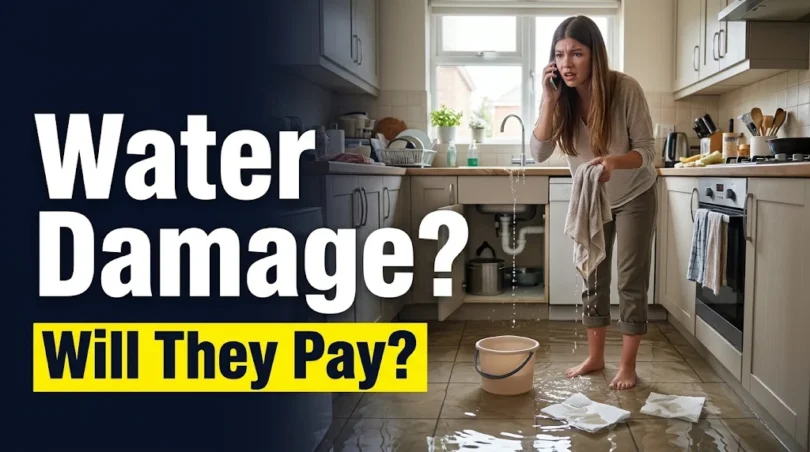

Homeowners insurance usually covers water damage that is sudden and accidental, like a burst pipe, a washing machine hose that splits or water from firefighters putting out a fire. It usually does not cover damage from flooding, from slow leaks that happened over time, from poor maintenance, or from sewer and drain backups unless you added a special endorsement. The source of the water and how quickly the damage happened decide whether your claim gets paid.
Water damage is among the most common and most expensive home insurance claims in the country. It is also one of the most frequently denied, mostly because homeowners don’t understand these rules until after the damage is done. Here is a clear guide.
The Key Question: Sudden or Gradual?
Insurers draw a sharp line between water damage that happened suddenly and damage that developed slowly.
- Sudden and accidental: something broke or failed unexpectedly, causing water to escape quickly. Usually covered.
- Gradual or repeated: a small leak dripped for weeks or months, causing rot, mold or stains. Usually not covered, because the insurer sees it as a maintenance issue you could have caught.
A pipe that bursts during a freeze is sudden. A slow drip under a bathroom sink that rotted the cabinet over six months is gradual.
Water Damage That Is Usually Covered
| Cause | Usually covered? | Notes |
|---|---|---|
| Burst pipe | Yes | If the home was heated or properly winterized when it froze |
| Washing machine or dishwasher hose failure | Yes | The damage is covered; the broken appliance itself usually isn’t |
| Water heater rupture | Yes | The water damage, not the old water heater |
| Overflowing bathtub or toilet | Yes | If accidental |
| Roof leak from storm damage | Yes | If wind, hail or a falling tree caused the opening |
| Ice dam leaks | Often | Depends on the policy and maintenance |
| Water used to put out a fire | Yes | Part of the fire claim |
| AC or sprinkler system leak | Often | If sudden |
Water Damage That Is Usually Not Covered
| Cause | Why it’s excluded | How to get protection |
|---|---|---|
| Flooding from rain, storm surge or rivers | Standard policies exclude flood | Separate flood insurance |
| Sewer or drain backup | Excluded unless endorsed | Water backup endorsement |
| Slow leaks over time | Seen as a maintenance issue | Regular inspections and quick repairs |
| Groundwater seeping into a basement | Considered flood or seepage | Flood insurance, sump pumps, waterproofing |
| Roof leak from an old, worn roof | Wear and tear | Roof maintenance and replacement |
| Mold from long term moisture | Gradual damage | Fix leaks fast; some policies sell limited mold coverage |
| Frozen pipes in an unheated vacant home | Neglect | Keep heat on or drain pipes |
The Pipe vs the Damage
A detail that surprises many homeowners: even when water damage is covered, the thing that failed often isn’t. If a corroded pipe bursts, insurance typically pays to tear out and replace damaged drywall, flooring and cabinets, and to repair the wall or floor to reach the pipe. But it may not pay to replace the old pipe itself, because that failure was wear and tear. The same goes for a worn out water heater or a broken washing machine.
Flood Insurance Is Separate
Flooding is the biggest gap. Standard homeowners policies exclude damage from surface water, overflowing rivers and lakes, storm surge and heavy rain that pools around your home. Flood insurance is available through the National Flood Insurance Program, run by FEMA, and through private insurers.
- NFIP policies typically have a 30 day waiting period before coverage starts, so you can’t buy it when a storm is already coming
- NFIP coverage limits are up to $250,000 for the building and $100,000 for contents on a home
- Private flood policies may offer higher limits and shorter waiting periods
The NFIP depends on Congress to renew its authority. It has lapsed briefly several times in recent years, and its current authorization runs to December 11, 2026. During a lapse, existing policies stay in force, but new policies and renewals can be delayed. Private flood insurance isn’t affected by those deadlines.
Many people think flood insurance is only for high risk zones. In reality, a large share of flood claims come from outside high risk areas. If heavy rain can pool near your home, it is worth checking prices.
Sewer and Drain Backup
When heavy rain overwhelms municipal sewers or your sewer line clogs, water and sewage can back up through floor drains, toilets and showers. Standard policies exclude this, but a water backup endorsement usually costs relatively little and adds coverage up to a set limit, often $5,000 to $25,000. If you have a finished basement, this endorsement is one of the most valuable add ons you can buy.
How to Avoid a Denied Water Claim
- Fix leaks immediately. A stain you ignored for months can turn a covered claim into a maintenance denial.
- Keep heat on in winter. If you travel, keep the thermostat at least in the mid fifties and consider shutting off the main water supply.
- Replace washing machine hoses every five years, or use braided steel hoses.
- Inspect water heaters and replace them near the end of their life span.
- Maintain your roof and clear gutters to prevent ice dams.
- Install leak detectors near water heaters, washers and sinks. Some insurers offer discounts for smart water shutoff devices.
- Test your sump pump before rainy seasons.
What to Do When Water Damage Happens
- Stop the water. Shut off the main water valve or the appliance supply line.
- Stay safe. Turn off electricity to affected areas if water is near outlets or appliances.
- Document everything. Take photos and video of the source and all damage before cleanup.
- Prevent more damage. Remove water, move belongings and run fans or dehumidifiers. Policies require you to take reasonable steps to limit damage.
- Keep receipts for emergency repairs, water extraction and supplies.
- Call your insurer quickly and file the claim.
- Save damaged parts, like the burst pipe or failed hose, in case the adjuster wants to inspect them.
- Don’t throw out damaged items until the adjuster has seen them or approved disposal.
Mold After Water Damage
Mold can begin growing within 24 to 48 hours in wet areas. If mold results from a covered sudden event, like a burst pipe, some policies cover cleanup, often with a lower limit. Mold from long term humidity or ignored leaks is usually excluded. Drying out your home quickly protects both your health and your claim.
Condo and Renters Water Damage
If you own a condo, the building’s master policy may cover the structure, while your own condo policy covers interior finishes, upgrades and belongings. Check your association’s bylaws to see where responsibility starts and ends. Renters are usually covered for their own belongings and liability through renters insurance, while the landlord’s policy covers the building. If water from your unit damages a neighbor’s unit, your liability coverage may apply.
Working With the Adjuster on a Water Claim
Water claims often come down to the adjuster’s view of how long the problem existed. A few habits help:
- Show the source clearly. Photos of the burst pipe, split hose or failed fitting help prove the damage was sudden.
- Get a written report from the plumber describing what failed and how.
- Keep moisture readings and drying logs from the mitigation company.
- Make a list of damaged belongings with approximate age and replacement cost.
- Ask questions in writing if the adjuster suggests the damage was gradual, and request the specific policy language behind any denial.
If you disagree with the decision, you can ask for a second inspection, hire an independent contractor to assess the damage, or in some cases hire a public adjuster who works for you rather than the insurer. Public adjusters usually charge a percentage of the claim, so they make most sense for large losses.
Does a Water Claim Affect Future Coverage?
Insurers share claim history through industry databases. Water claims are seen as a warning sign because one leak often leads to another. Multiple water claims in a few years can raise your premium or make it harder to find coverage. For small damage close to your deductible, it may be better to pay yourself. For large damage, file the claim, since that is exactly what insurance is for.
How Much Water Damage Costs to Fix
Costs vary widely. A small leak that affects one room may cost a few thousand dollars to dry and repair. A burst pipe that soaks multiple rooms, ceilings and floors can easily cost tens of thousands, especially when mold remediation and replacing finished flooring are involved. These high costs are why prompt drying and prevention matter so much.
A Quick Example
During a cold snap in Dallas, a pipe in Maria’s attic bursts while she is home. Water pours through the ceiling into her living room. She shuts off the main valve, takes photos and calls a water mitigation company. Her homeowners policy pays for the water extraction, drying, new drywall, ceiling, flooring and a ruined couch, minus her deductible. It doesn’t pay for the plumber’s cost to replace the burst section of pipe itself.
A year earlier, her neighbor had a slow leak behind a dishwasher that rotted the subfloor over several months. That claim was denied as gradual damage. Same type of water, very different outcomes.
Questions to Ask Your Agent
- Does my policy cover sudden water damage, and what are the exclusions?
- Do I have a water backup endorsement, and what is the limit?
- Is there a separate limit for mold?
- What is my flood risk, and how much would flood insurance cost?
- Do you offer discounts for leak detection or automatic shutoff devices?
What to Do Next
Read the water related exclusions in your policy and check whether you have a water backup endorsement. Look up your flood risk and get a flood insurance quote, especially before hurricane or rainy season. Then walk through your home looking for slow leaks, aging hoses and an old water heater. A little prevention is the best way to keep water damage, and a denied claim, from happening.
Sources
- Insurance Information Institute: Water Damage and Your Policy
- FEMA FloodSmart: National Flood Insurance Program
- National Association of Realtors: NFIP Expiration FAQ
This article is for general information only and is not insurance, financial or legal advice. Coverage, prices and rules vary by state, insurer and policy. Read your own policy and talk with a licensed insurance agent or professional about your situation.
Frequently Asked Questions
How quickly should I report water damage?
As soon as possible. Policies require prompt notice, and quick reporting helps prove the damage was sudden.
Does homeowners insurance pay for a plumber?
It usually pays to access and repair damage caused by the leak, but not to replace a worn out pipe or fixture that failed from age.
Does homeowners insurance cover water damage from a neighbor's unit?
Often your own policy covers your damage, and your insurer may then seek repayment from the neighbor’s insurer if they were responsible.
Is a burst pipe covered by homeowners insurance?
Usually yes, if it was sudden and accidental and the home was properly heated. The damaged pipe itself may not be covered.
Does homeowners insurance cover a slow leak?
Usually not. Damage that develops over weeks or months is generally treated as a maintenance issue.
Does homeowners insurance cover flooding?
No. You need a separate flood insurance policy from the NFIP or a private insurer.
Is sewer backup covered?
Not by a standard policy. A water backup endorsement adds coverage up to a set limit.
How long is the waiting period for flood insurance?
NFIP policies usually have a 30 day waiting period. Some private flood policies have shorter waits.
Will a water damage claim raise my premium?
It can. Water claims are common and may affect your rate or future eligibility, so consider the claim size versus your deductible.
Does homeowners insurance cover a leaking roof?
Yes if a storm or falling object caused the leak. Leaks from an old, worn roof usually aren’t covered.